How to Choose a Cleaning Brush for Narrow Glass
Compare bottle, straw and detail brushes by the opening they must fit, the reach you need, and the parts that should never be forced or brushed.
Choose a brush for the smallest opening it has to pass through and the surface it needs to reach. A long handle is no help if the head is too wide, and a flexible shaft is not permission to push through a bend you cannot see.
First confirm that the glass maker allows brushing. This is a tool-selection guide for removable glass with an accessible cleaning path, not a recommendation to brush every Puffco attachment. For example, Puffco tells Proxy owners to use its soak-and-rinse method and avoid abrasive materials.
We may earn a commission when you buy through the Amazon links in this article. As an Amazon Associate I earn from qualifying purchases.
Compare your options
Bottle brush
A larger accessible body or opening that has room for the brush head.
Measure the opening and head width. Do not squeeze a head through a narrow neck just because the handle reaches.
Straw brush
A narrow, accessible passage that the maker permits you to brush.
Check head width, usable reach and tip protection. A wire shaft must not scrape the glass.
Detail brush
Accessible edges or crevices outside a narrow tube.
Do not use it to probe an electronic chamber, charging port or enclosed air path.
Measure the opening, not just the whole piece
With the empty glass detached and cool, measure the narrowest accessible opening and estimate the reach to the area you want to clean. Keep the brush outside while checking size. Do not use insertion pressure as your measuring tool.
Look for the brush's head diameter or width as well as its usable length. A listing's overall dimensions may include its handle or packaging and may not tell you how wide the bristles are. If that important measurement is missing, ask the seller rather than guessing.
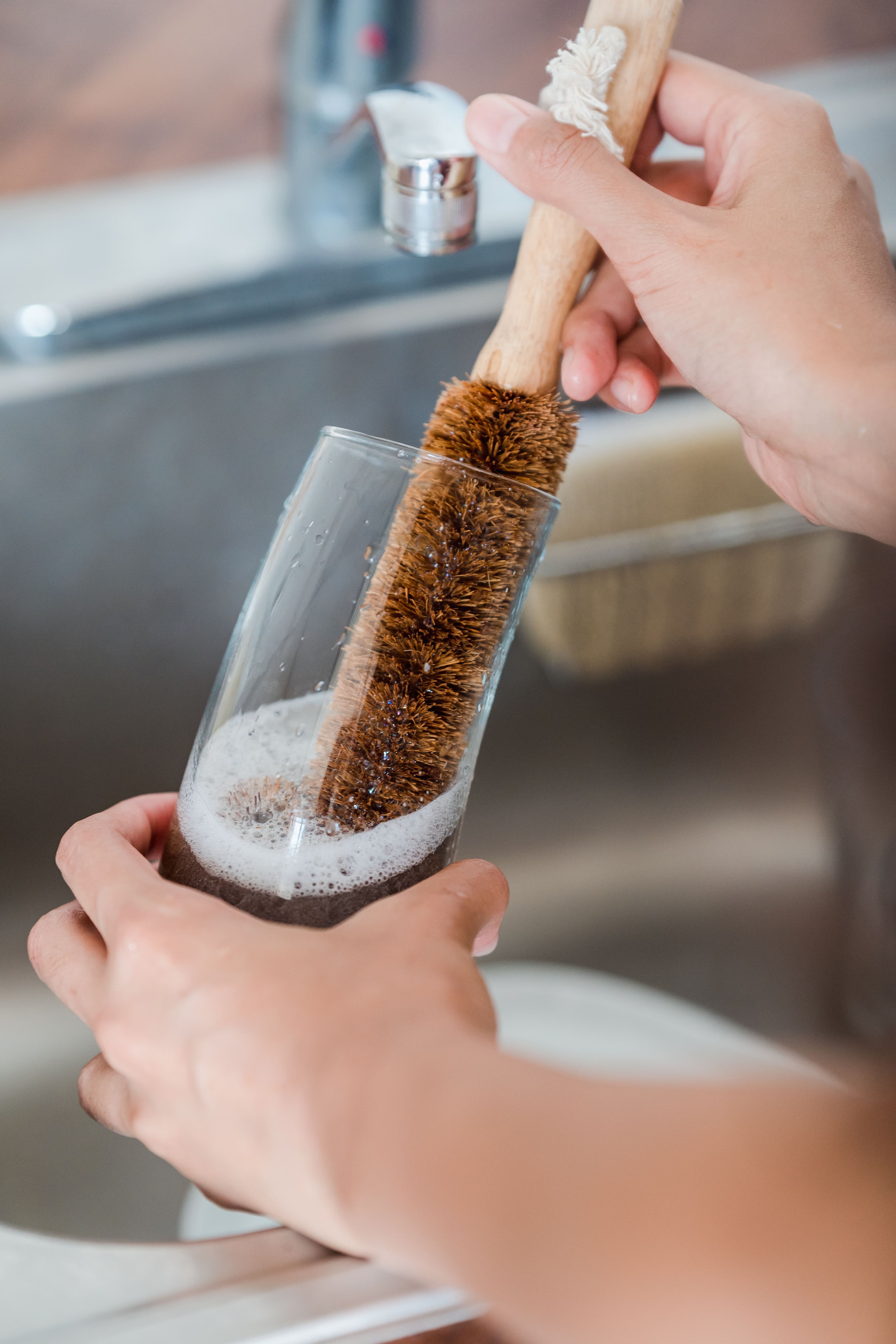
Check the tip and the exposed parts of the shaft
Inspect the end before it goes near glass. The cleaning surface should cover the parts that could touch the piece; a bare metal tip or worn bristles can leave the spine exposed. Corning specifically warns that a worn brush spine can scratch glass.
Use only the gentle contact your glass maker permits. Stop if the head catches, requires force or cannot be withdrawn easily. A brush is not a tool for prying off hardened residue, and a wire handle should not become a scraper.
Do not chase every internal bend
A brush that fits the first opening may still be wrong for an internal bend, narrow joint or enclosed section. If you cannot see where the head is going or whether it can come back out, do not push farther. Use the approved soaking method or ask the maker how that part is meant to be cleaned.
Keep this task separate from cleaning powered equipment. A straw brush sold for water bottles is not automatically suitable for an e-rig chamber, contact pin or base air path.
One set to compare: OXO's three brush shapes
OXO's Water Bottle Cleaning Set includes a bottle brush, straw brush and detail cleaner with nylon bristles. They serve different access needs, which makes the set a useful example of what to compare. It is not a universal fit recommendation for glass accessories.
We have not tested these brushes in Puffco glass or compared their cleaning performance with other brands. Check the current product dimensions and the actual head before use. If your maker's soak already cleans the piece, you do not need to buy a brush at all.
Clean and inspect the brush afterward
Follow the brush maker's washing instructions, clear away residue and let the brush dry before storing it. Keep tools used for this job separate from brushes used for drinking bottles or food equipment.
Before the next clean, check for flattened or missing bristles, a damaged tip and an exposed shaft. Replace a worn brush instead of compensating with extra pressure.
Supplies, if you need them
We may earn a commission when you buy through the Amazon links in this article. As an Amazon Associate I earn from qualifying purchases.
OXO Good Grips Water Bottle Cleaning Set
Bottle brush, straw brush and detail cleaner
Three nylon-bristle shapes for accessible bottle openings and crevices. Measure the opening first; these are not chamber tools, and we have not tested their fit in a particular rig. Never force a brush past an internal glass feature.
See OXO Good Grips Water Bottle Cleaning Set on Amazon (paid link)
Check the selected pack, seller and delivery cost on Amazon before ordering. These links open in a new tab.
Sources
Quick answers
Can I use a straw brush on Puffco glass?
Do not assume compatibility. Check the exact attachment's instructions. Puffco's current Proxy glass routine uses soaking and rinsing and excludes abrasive materials.
Will the OXO brush set fit every narrow opening?
No. Compare the actual opening with the brush head and usable reach. We have not tested the set in specific glass attachments.
Should I buy the stiffest brush for stubborn residue?
Choose the method your glass maker permits, not the greatest force. A brush that scratches, catches or needs to be forced is the wrong tool for that part.
Need a case for your supplies?
Dab Pal holds 30 regular Q-tips, with a slider to separate clean and used swabs and an empty 1oz bottle. Swabs and alcohol are not included.
See Dab Pal